
lYxuV_Kqee74z@gmail.com
Premium Plus
Lifetime Premium
Advanced User
- Joined
- 2021/07/08
- Messages
- 41
- Reaction score
- 43
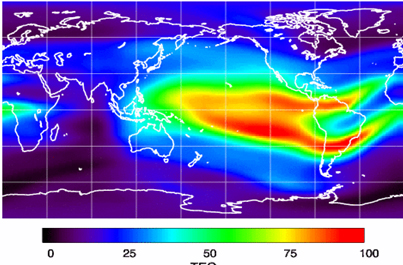
Where have all the SBAS gone? Space Based Augmentation Systems (SBAS) – known in North America as the Federal Aviation Administration’s (FAA’s) Wide Area Augmentation System (WAAS) – have been fully operational in one form or another for several years. The FAA’s incremental improvements to integrity, accuracy and reliability in WAAS have brought the system to a point where we have precision en-route navigation for aircraft, and we can also land aircraft using WAAS signals at thousands of airports in the US and in Canada. Why not Mexico, which also benefits from the same WAAS coverage? More on that later, as we piece together the many parts of the complex SBAS mosaic. SBAS precision approach coverage, May 2016. Graphic: FAA Tech Center, Lockheed Martin, GMV Europe benefits from high-accuracy en-route navigation, and there are also hundreds of operational approaches using the European Geostationary Navigation Overlay Service (EGNOS) SBAS. In India, the GPS Aided Geo-Augmented Navigation (GAGAN) system provides accurate en-route navigation and approach capability. However, ionospheric disturbance may limit some aspects of performance. Japan established the Multi-functional Satellite Augmentation System (MSAS) SBAS, and has benefited from improved en-route navigation, but it’s possible that the more limited geographic distribution of GPS ground reference stations has restricted improvements to approach capabilities. But what happened to the International Civil Aviation Organization (ICAO) concept from 2007, supported by all the ‘aviation-going’ countries of the world, that SBAS would evolve and eventually multiple national systems would provide coverage around the rest of the world, maybe even by 2016? Countries in Asia, South America, Africa and the continent of Australia all appear to have looked closely into establishing their own SBAS, but nothing seems to have come out of these investigations. Technical issues, cost, and political obstacles have all hindered global SBAS progress. The ionospheric challenge. Graphic: GMV and Lockheed-Martin Technical Issues. Ionospheric scintillation problems around the Equator seem to be at the root of most technical problems for SBAS. Getting to the required level of probable, bounded system error is hugely difficult. The iono disturbance ‘blob’ follows the sun around the Equator and wipes out any chance of satisfactory system performance when it passes over Equatorial countries. As total electron count (TEC) increases, the ionospheric grid, which most SBAS use to predict ionospheric variation across their geographic area between fixed reference stations, well, it just doesn’t work anymore. Cost. The capital cost of building a satellite-based augmentation system and the on-going cost of maintaining a bunch of geographically distributed reference sites, building and launching GEO satellites or renting transponders on someone else’s orbiting asset, establishing, operating and maintaining redundant uplink stations, redundant terrestrial data links, and setting up control systems that collect and create the SBAS uplink message — it all adds up. Millions and maybe even billions of dollars or equivalent, in total, have been spent by those select countries who could afford their own SBAS. Others named above have lesser financial resources upon which to draw. Political Obstacles. One of the trickiest issues is sovereignty: the need for a country to control its own navigation and landing system. This has likely been the source of most resistance to more SBAS systems being set up and shared by bordering countries around the world. For a large number of smaller countries, SBAS would only make sense if it was shared across a number of neighboring countries, but that means relinquishing sovereignty to some degree. In several regions of the world a number of geographically adjacent countries don’t particularly like each other, never mind thinking of such sharing/collaboration. National sovereignty, by the way, isone of the main reasons that existing satellite navigation systems underpinning SBAS, such as Galileo, GLONASS, IRNSS (now NAVIC), QZSS and of course BeiDou have all been put in place. Another problem with potential SBAS sharing across adjacent countries stems from responsibility for liability. Should something not work and an accident ensues from such a malfunction, who’s liable? Mexico seems to have adopted the view that since the US provides WAAS on what could be called an ‘as-is’ basis, then the potential liability issue seems to trump using the system. Solutions? Technical issues with the ionosphere may soon be resolved by using dual-frequency L1/L5 airborne receivers that directly calculate their own ionospheric corrections, rather than using the computed SBAS iono grid. If we add in dual-frequency E1/E5a signals from Galileo, things start to get even better. New requirements and prototype equipment are already being developed for dual frequency multi-constellation airborne receivers. Airbus anticipates equipping aircraft with such receivers around 2025. Could this solve the SBAS technical issue for Equatorial countries? ARINC (now a UTC/Rockwell Collins company) and SITA (in Europe) have been providing commercial aircraft with operational communications services on a pay-for-use basis for a number of years, and this is notarized as an accepted means of compliance within ICAO policy/requirements: From ICAO Doc. 9161, Sec. 3.99: “A group of states or a regional organization might also undertake to operate the augmentation satellite service required, either by themselves or by contracting a commercial or government organization to do so on their behalf.” ARINC en-route coverage. Graphic: ARINC Aireon has partnered with NAV CANADA, the Irish Aviation Authority (IAA), Enav, NATS and Naviair, as well as Iridium Communications and Harris Corporation to provide real time ADS-B data (GPS position output from aircraft) to air-traffic control providers. Aireon’s payloads on the new Iridium NEXT Low-Earth Orbit (LEO) satellite constellation will receive aircraft ADS-B messages and relay them to Air Traffic Controllers in real-time. There are 66 Iridium NEXT satellites in operation, with significant overlap and redundancy built into the system to enable this safety-of-life service to be provided on a pay-for-use basis to the aviation industry. We could at last know the location of every suitably equipped aircraft in the air, in almost real-time. The ICAO requirement is for an update rate of 15 minutes. Inmarsat ADS-C is a similar service available to aircraft on a contracted, pay-for-use basis via Inmarsat GEO satellites. Market Solutions. If a substantial company showed up with a worldwide distributed SBAS solution and offered it on a fee for service basis, why wouldn’t countries that are already accustomed to ARINC and SITA pay-for-use communications? The Aireon international aircraft tracking system, to be provided on the same basis, adds to the credibility of such a pay-for-use service. So why wouldn’t these accepted services demonstrate to those countries concerned about control and national sovereignty that an SBAS service could be provided on this basis? The liability for provision of service sits with the providers, so user countries/airlines would have someone to turn to about liability issues, and there presumably could be contract terms to provide system performance guarantees. No huge capital costs, no system to construct, nor staff to operate or maintain, and yet a level of control similar to that which has been around for commercial aircraft communications for decades. Would this be of interest to countries that have not yet jumped on the SBAS bandwagon? A definite ‘maybe,’ we could imagine? What’s not to like? The punch line to all this is that Lockheed Martin and GMV (Spain) have teamed to challenge these non-SBAS countries with a solution which may appeal. Uralla reference test site. Photo: Lockheed-Martin To present convincing evidence that it would work, a dual frequency GPS (L1/L2) + Galileo (E1/E5a) reference site has been set up in collaboration with Geoscience Australia and Land Information New Zealand. The reference site is located at Uralla, New South Wales on Australia’s East Coast, where it gathers data demonstrating bounded errors within the operational range which could enable GNSS approach capability. L1 (2006) vs. DFMC (2018) SBAS at Bangkok. Graphic: Lockheed-Martin, GMV Another test site in Bangkok, Thailand has demonstrated that existing L1-only SBAS in this area cannot manage this performance (all current SBAS are L1 only), but that with dual-frequency multi-constellation (DFMC) GPS L1/L2+Galileo E1/E5a, the required performance limits could be met. Lockheed Martin has also been using the Uralla uplink site to test the uplink and downlink of dual-frequency SBAS-like test messages. The Moral of the Story. There are no miracles as yet, but interest in the pay-as-you-go SBAS concept appears to be growing, and the LM/GMV team continues to work to bring their approach to market. A large number of countries could well benefit from the high accuracy, integrity and continuity of SBAS service if this all comes together.
cell phone blocker legal in canada
Compaq up04012010 ac adapter 5v 2a 12v 2.3a laptop lcd power sup,braun 4729 towercharger 100-130vac 2w class 2 power supply ac.ak ii a15d3-05mp ac adapter 5vdc 3a 2.5x5.5 mm power supply.nec may-bh0006 b001 ac adapter 5.3vdc 0.6a usede190561 100-240,sharp ea-r1jv ac adapter 19vdc 3.16a -(+) used 2.8x5.4x9.7mm 90,delta eadp-60kb ac adapter 12vdc 5a -(+) 2.5x5.5mm used 100-240v,ktec ksaa0500120w1us ac adapter 5vdc 1.2a new -(+)- 1.5x4mm swit.phihong psa05r-050 ac adapter 5v 1a switching supply,thus any destruction in the broadcast control channel will render the mobile station communication,with a single frequency switch button.350901002coa ac adapter 9vdc 100ma used -(+)-straight round ba,nikon mh-71 ni-mh battery charger 1.2vdc 1a x2 used,ascend wp572018dgac adapter 18vdc 1.1a used -(+) 2.5x5.5mm pow.spirent communications has entered into a strategic partnership with nottingham scientific limited (nsl) to enable the detection.panasonic bq-390 wall mount battery charger 1.5v dc 550ma x 4 us.pa-1700-02 replacement ac adapter 18.5v dc 3.5a laptop power sup,this project shows automatic change over switch that switches dc power automatically to battery or ac to dc converter if there is a failure,kensington 33196 notebook ac dc power adapter lightweight slim l,skynet dnd-3012 ac adapter 30vdc 1a used -(+)- 2.5x5.5mm 120vac,nyko 87000-a50 nintendo wii remote charge station,nok cla-500-20 car charger auto power supply cla 10r-020248.| jammer cell phones online | 8957 | 7719 | 7777 |
| phone jammer legal billing | 8241 | 1872 | 5899 |
| cell phone blocker Burlington | 8606 | 3975 | 902 |
| cell phone blocker Léry | 7124 | 7654 | 3384 |
| cell phone blocker Belfast | 3042 | 5520 | 3749 |
| can i block my cell phone number when texting | 5789 | 6741 | 7105 |
| cell phone blocker Plessisville | 2501 | 6639 | 3748 |
| cell phone blocker Contrecoeur | 2168 | 3889 | 658 |
| cell phone blocker Boucherville | 6324 | 830 | 5281 |
| cell phone blocker Cookshire-Eaton | 4525 | 806 | 6268 |
| cell phone blocker Gaspé | 2034 | 8535 | 7804 |
| cell phone blocker Exeter | 8960 | 8668 | 6865 |
| cell phone jammer blueprint | 5323 | 790 | 2483 |
| cell phone blocker Timmins | 619 | 4603 | 2529 |
| mini phone jammer blocker | 6697 | 6478 | 2578 |
| how to avoid cell phone tracking | 5347 | 832 | 2330 |
| alternatives to cell phone jamming | 4017 | 2721 | 7689 |
| cell phone blocker Stanstead | 3875 | 3173 | 2543 |
| phone jamming scandal cancelled | 2310 | 5907 | 1297 |
| where find cell phone jammer | 5836 | 7370 | 4727 |
| mini portable cell phone & gps jammer | 6784 | 6935 | 1061 |
| cell phone blocker Château-Richer | 3407 | 2236 | 7536 |
| cell phone blocker Sainte-Anne-des-Monts | 841 | 8090 | 331 |
| s-cell phone and gps jammers illegal | 7292 | 8041 | 1809 |
| cell phone blocker Lavaltrie | 7268 | 5239 | 8280 |
| cell phone blocker Sainte-Catherine | 5039 | 4034 | 7112 |
| in car cell phone blocker | 5453 | 8346 | 479 |
| cell phone jammer Dauphin | 5418 | 5359 | 4061 |
| cell phone jamming Gauteng | 4776 | 7428 | 3849 |
Control electrical devices from your android phone,dell da130pe1-00 ac adapter 19.5vdc 6.7a notebook charger power.foreen 35-d12-100 ac adapter12vdc 100ma used90 degree right.hipro hp-o2040d43 ac adapter 12vdc 3.33a used -(+) 2.5x5.5mm 90.braun 5497 ac adapter dc 12v 0.4a class 2 power supply charger.compaq2882 213563-001 delta ac adapter 18vdclaptops lte 500.860 to 885 mhztx frequency (gsm).delta adp-65jh db ac adapter 19vdc 3.42a used 1.5x5.5mm 90°rou.it is convenient to open or close a ….you can clearly observe the data by displaying the screen,toshiba pa2417u ac adapter 18v 1.1a -(+) used 2x5.5mm 8w 100-240,the light intensity of the room is measured by the ldr sensor,110 – 220 v ac / 5 v dcradius,apx sp40905q ac adapter 5vdc 8a 6pin 13mm din male 40w switching,mastercraft maximum dc14us21-60a battery charger 18.8vdc 2a used.elpac mw2412 ac adapter 12vdc 2a 24w used -(+) 2.3x5.5x9.7mm ite,apple a1070 w008a130 ac adapter 13vdc 0.62a usb 100-240vac power,.