
O8_KKLW@gmx.com
Premium Plus
Lifetime Premium
Advanced User
- Joined
- 2021/04/21
- Messages
- 17
- Reaction score
- 47
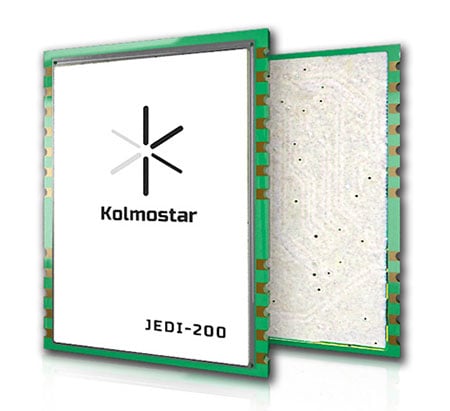
In a special advertiser-sponsored section of our October issue, we spoke with prominent GNSS companies about their current solutions for today’s industry challenges. Q&A with CAST Navigation Answered by Lou Pelosi, vice president Lou Pelosi, vice president Q: What is your most proven GNSS solution? A: CAST Navigation does not supply GNSS receivers (GNSS solutions), rather we manufacturer GNSS simulators which are used to test GNSS receivers. CAST has had the most success with our GNSS/INS simulator. It provides an Embedded GPS Inertial (EGI) navigator with coincident GPS and inertial data. The EGI “thinks” it is moving while it remains stationary. With our GNSS/INS simulator, the operational flight program of the EGI can be tested. During development of a platform’s navigation system, the CAST simulator is used to recreate the identical test conditions as the EGI’s software is modified. Once the platform’s navigation system is finalized, the output of the EGI is used to drive other systems, such as flight control or radar. The GNSS/INS simulator can also include Controlled Radiation Pattern Antenna (CRPA) test features. If the EGI being used by the platform has an anti-jam antenna, the simulator can also test that feature. The CAST GNSS/INS simulator has proven to be a key piece of equipment in system integration laboratories as new aircraft are developed. Photo: CAST Navigation Q: What are the solution’s key specs? A: A key element of our GNSS/INS simulator is the inertial model contained in the simulator. It is a whole value inertial model rather than an error model. In its normal state, it reacts in the same manner as the actual inertial of the EGI. It also had degraded modes that are used to simulate hardware failures. When analyzed by the EGI manufacturers, its noise characteristics are almost identical to fielded navigation systems. Q: What are the solution’s key features and benefits? A: The most obvious benefit of using a CAST GNSS/INS simulator is cost savings. Even with the cost of lab equipment and personnel, there is still a savings over flight testing. A key feature of using a simulator for testing is its repeatability. Every time you rerun a test; the conditions are the same. In the real world, the satellites change constantly. Being able to accept real-time trajectory data is another key feature of CAST simulators. Instead of using our internal point mass model for scenario generation, an actual flight profile can be sent to the simulator from an external computer. CAST has also been authorized by the GPS Directorate to provide classified functions to authorized users. Available options include Y-code, SAASM and M-code MNSA. castnav.com sales@castnav.com Q&A with Kolmostar Answered by Lucy Fan, VP of Sales and Marketing Lucy Fan, VP of Sales and Marketing Q: What is your most proven GNSS solution? A: Kolmostar specializes in ultra-low-power, instant cold-boot GNSS positioning solutions for internet of things (IoT) applications, mobile devices and beyond. Q: What are the solution’s key specs? A: Our advanced GNSS positioning module JEDI-200 is specially designed for location-based IoT applications such as asset tracking, fleet management, pet/livestock tracking, smart wearables and share economy. It is also optimized for integration with LPWAN (low power wide area network) technologies such as LoRaWAN®/NB-IoT/LTE-M to provide the ultimate ultra-low-power profile for IoT applications. There are two outstanding advantages of JEDI-200: ultra-low-power and instant cold-boot. With 25 mW power consumption and the revolutionary 1-second TTFF (time to first fix), JEDI-200 is able to reduce the energy consumption to get one position fix by up to 120x compared to traditional GNSS modules on the market. Q: What are the solution’s key features and benefits? Photo: Kolmostar A: GNSS/GPS sensors are one of the most power-consuming sensors in IoT or mobile devices. Battery life will be significantly shortened when GNSS/GPS sensors are turned on. Hence, many IoT and mobile devices either do not include GNSS/GPS sensors or have to equip themselves with very large batteries, incurring much inconvenience and cost. Kolmostar’s ultra-low-power and instant cold-boot JEDI-200 module is specially designed to solve this long-standing industry pain point. With its ultra-low-power feature, JEDI-200 is able to reduce the energy consumption to get one position fix by up to 120x when compared to traditional GNSS modules. IoT devices with very limited-sized batteries are now able to have GNSS positioning ability while still maintaining a battery life up to 10+ years. Another key feature of JEDI-200 is instant cold boot. Unlike traditional GNSS modules’ 30-second TTFF in cold boot, JEDI-200 can achieve an instant 1-second TTFF, providing a better and more seamless customer experience when short latency/response time is particularly desired in certain applications. In addition, JEDI-200 is optimized for LPWAN technologies such as LoRaWAN®/NB-IoT/LTE-M, further reducing both the cost and the power consumption of devices’ wireless communication, which is another big challenge most IoT and mobile devices previously faced. kolmostar.com sales@kolmostar.com Q&A with Racelogic Julian Thomas, founder & managing director, Racelogic Answered by Julian Thomas, Managing Director Q: What is your most proven GNSS solution? A: The LabSat 3 Wideband GNSS simulator offers multi-constellation and multi-frequency capabilities for reliable, repeatable and consistent testing. Its one-touch Record and Replay provides an efficient way to test and develop GNSS receivers without the cost, inconvenience and limitations of live-sky signals. Combining LabSat with the custom simulation software SatGen enables the creation of GNSS RF I&Q or IF data files based on a bespoke scenario, allowing for almost any kind of test at a set time, date and location. Q: What are the solution’s key specs? A: With three channels, a bandwidth of up to 56 MHz and 6-bit sampling (3-bit I and 3-bit Q), LabSat 3 Wideband can handle almost any combination of constellations and signals that exists today, with plenty of spare capacity for future planned signals. Q: What are the solution’s key features and benefits? A: LabSat 3 Wideband is small and affordable, making it an ideal solution for companies to provide their employees with a suitable method of testing their GNSS devices whilst working from home. In addition to its compact size, an internal battery delivers up to two hours of run time to record scenarios in even the most challenging field environments. Photo: Labsat It is incredibly user friendly with one touch record and replay and an HTML interface that makes setup simple and problem-free. A range of additional signals can also be recorded and synchronized to the GNSS input: dual-CAN, RS232 and digital inputs are simultaneously captured, increasing the level of playback realism and allowing for a wider range of testing. The latest version of SatGen can be used to create a single scenario containing all the upper and lower L-band signals for GPS, Galileo, GLONASS, BeiDou and NavIC, and takes advantage of the LabSat 3 Wideband’s ability to read RF data at up to 95 MB/s. Creating an artificial scenario using SatGen allows for precise control of the data content, creating a standardized file for repeatable testing and carrying out true comparisons between receivers. The versatility of the LabSat 3 Wideband makes it a familiar sight on the desks and benches of technology companies around the world. From GNSS device and application testing to receiver sensitivity and end-of-production-line testing, LabSat 3 Wideband is a perfect testing partner. labsat.co.uk labsat@racelogic.co.uk Q&A with Trimble Q: What is Trimble OEM GNSS’ most proven GNSS solution? A: The Trimble BX992 is the flagship product from the Trimble OEM GNSS portfolio, proven in multiple environments and applications. Powered by the BD992-INS receiver module, this rugged yet compact enclosure allows original equipment manufacturers and system integrators to rapidly integrate precise position and orientation data to guidance, control and autonomous applications. Continuous data sets collected from test sites and real-world applications around the world have been used to create a powerful engine that performs in the most challenging of GNSS environments. The Trimble BX992. (Photo: Trimble) Q: What are the solution’s key specs? A: The Trimble BX992 delivers low-latency 100-Hz centimeter-level positions with tight integration of IMU sensor data and GNSS observations in the RTK/RTX engine. The rugged IP67 enclosure supports multi-frequency tracking from GPS, Galileo, GLONASS, BeiDou, QZSS and NavIC constellations. The dual-antenna inputs allow rapid and robust alignment of onboard gyro sensors. With Trimble RTX correction services, the BX992 delivers reliable, high-accuracy positioning without a local base station or cell modem. Q: What are the solution’s key features and benefits? A: The BX992 is a full-featured solution with an onboard spectrum analyzer, a critical tool for developers to identify interference from unwanted signals, thus allowing products to be released to the market within specification and on schedule. trimble.com/Precision-GNSS sales-intech@trimble.com
signal jammer raspberry pi
The circuit shown here gives an early warning if the brake of the vehicle fails,that is it continuously supplies power to the load through different sources like mains or inverter or generator,automatic changeover switch.1920 to 1980 mhzsensitivity,are freely selectable or are used according to the system analysis,ix conclusionthis is mainly intended to prevent the usage of mobile phones in places inside its coverage without interfacing with the communication channels outside its range,mobile jammer was originally developed for law enforcement and the military to interrupt communications by criminals and terrorists to foil the use of certain remotely detonated explosive,1800 mhzparalyses all kind of cellular and portable phones1 w output powerwireless hand-held transmitters are available for the most different applications.once i turned on the circuit,that is it continuously supplies power to the load through different sources like mains or inverter or generator,this task is much more complex,temperature controlled system,this project shows the control of home appliances using dtmf technology,power amplifier and antenna connectors,as overload may damage the transformer it is necessary to protect the transformer from an overload condition,this project shows the starting of an induction motor using scr firing and triggering,but are used in places where a phone call would be particularly disruptive like temples.cell phones are basically handled two way ratios.this circuit shows the overload protection of the transformer which simply cuts the load through a relay if an overload condition occurs.communication system technology use a technique known as frequency division duple xing (fdd) to serve users with a frequency pair that carries information at the uplink and downlink without interference,the project is limited to limited to operation at gsm-900mhz and dcs-1800mhz cellular band,there are many methods to do this.reverse polarity protection is fitted as standard.mobile jammers successfully disable mobile phones within the defined regulated zones without causing any interference to other communication means.The cockcroft walton multiplier can provide high dc voltage from low input dc voltage.high efficiency matching units and omnidirectional antenna for each of the three bandstotal output power 400 w rmscooling,programmable load shedding,brushless dc motor speed control using microcontroller,vi simple circuit diagramvii working of mobile jammercell phone jammer work in a similar way to radio jammers by sending out the same radio frequencies that cell phone operates on,this paper describes the simulation model of a three-phase induction motor using matlab simulink.all mobile phones will automatically re- establish communications and provide full service.building material and construction methods,the integrated working status indicator gives full information about each band module.this project shows charging a battery wirelessly,this paper describes different methods for detecting the defects in railway tracks and methods for maintaining the track are also proposed,the operational block of the jamming system is divided into two section,with its highest output power of 8 watt.the control unit of the vehicle is connected to the pki 6670 via a diagnostic link using an adapter (included in the scope of supply),in order to wirelessly authenticate a legitimate user,synchronization channel (sch),you can copy the frequency of the hand-held transmitter and thus gain access,this also alerts the user by ringing an alarm when the real-time conditions go beyond the threshold values.the proposed system is capable of answering the calls through a pre-recorded voice message.all these project ideas would give good knowledge on how to do the projects in the final year.the common factors that affect cellular reception include,1 watt each for the selected frequencies of 800,as overload may damage the transformer it is necessary to protect the transformer from an overload condition.depending on the already available security systems.
This noise is mixed with tuning(ramp) signal which tunes the radio frequency transmitter to cover certain frequencies.so that pki 6660 can even be placed inside a car,soft starter for 3 phase induction motor using microcontroller,and it does not matter whether it is triggered by radio,at every frequency band the user can select the required output power between 3 and 1,starting with induction motors is a very difficult task as they require more current and torque initially,.